

The Global Art Market in 2025–2026: Trends, Growth, and Challenges
Based on insights from the Art Market Report 2026 by Arts Economics (View).
⸻
Introduction
The global art market entered 2026 with renewed optimism, following a year of modest recovery and structural change. After two years of contraction, the market regained momentum in 2025, signaling resilience in an increasingly complex economic and geopolitical environment.
According to the latest Art Market Report, global art sales reached $59.6 billion in 2025, representing a 4% increase year-on-year. While the growth is moderate and still below the peak reached in 2022, it highlights a market adapting to new economic realities, evolving collector behavior, and technological shifts in how art is bought and sold.
This article explores the key trends shaping the art market, including regional performance, the role of dealers and auctions, the evolution of online sales, and the challenges facing the industry in the coming years.
⸻
The Art Market Returns to Growth
After a period of volatility following the pandemic boom and slowdown, the art market stabilized in 2025.
Key highlights:
• Global art sales increased 4% to $59.6 billion
• Public auction sales grew 9%
• Dealer sales rose 2%
• Transaction volume reached 41.5 million artworks sold
The recovery was largely driven by strong high-end sales in the second half of the year, especially for works priced above $10 million.


⸻
The Dominance of the US, UK, and China
The global art market remains heavily concentrated in a few major hubs.
United States: The Leading Art Market
The United States maintained its dominant position thanks to its strong collector base and major auction houses.
Notably:
• Sales rose 5% in 2025
• High-value artworks above $10 million increased nearly 40%
• The US remains the central hub for international art trade
However, policy uncertainty and trade tariffs introduced new challenges for international art transactions.
Europe: Steady but Uneven Growth
Europe’s performance varied across countries:
• France: +9% growth
• Switzerland & Austria: +13%
• Spain: +6%
• Germany: −10%
• Italy: −2%
France strengthened its position as the largest art market in the European Union.
Asia: Mixed Performance
Asian markets showed diverse outcomes:
• China stabilized after previous declines
• South Korea grew 6%
• Japan saw a slight decline of 1%
Economic concerns and the Chinese real estate slowdown influenced collector spending across the region.

⸻
Auctions vs. Dealers: Who Drives the Market?
The art market operates through two primary channels:
• Dealers and galleries
• Auction houses
In 2025:
• Dealers accounted for 58% of total market sales
• Auction houses accounted for 42%
Auction sales showed the strongest growth, increasing 9% year-on-year, suggesting renewed confidence among sellers willing to place high-value works on the public market.

⸻
The Rise—and Stabilization—of Online Art Sales
Online sales surged during the COVID-19 pandemic but have since stabilized.
In 2025:
• Online art sales reached $9.2 billion
• Represented 15% of the global art market
• Down from a pandemic peak of 25% in 2020
While digital platforms remain essential for discovery and lower-priced works, the highest-value transactions still occur through live auctions, art fairs, and gallery exhibitions.

⸻
Art Fairs and the Power of In-Person Experiences
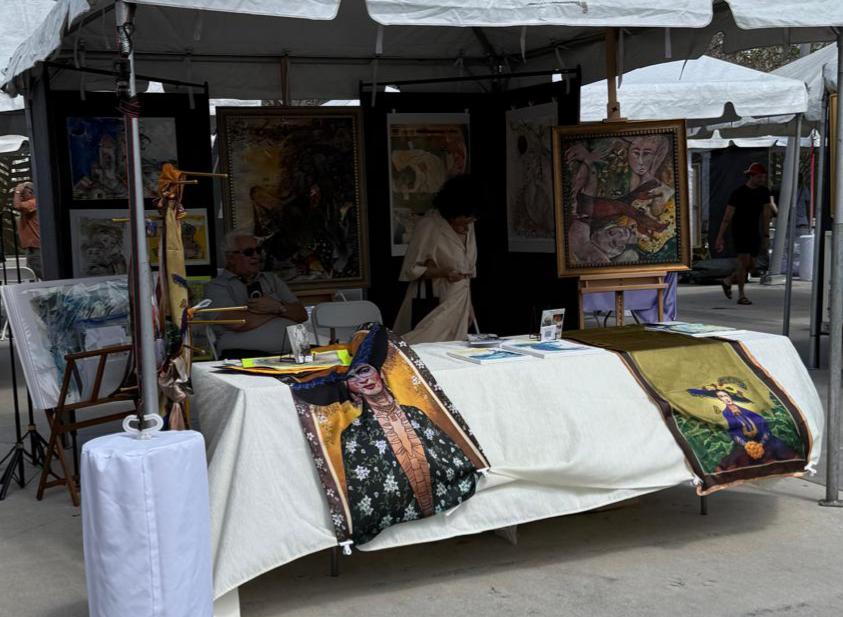
Despite the growth of digital channels, in-person art events remain central to the industry.
Art fairs accounted for:
• 35% of dealer sales in 2025
Major international fairs continue to function as the primary meeting point for collectors, galleries, and institutions.
The data suggests that the future of art sales is hybrid, combining digital discovery with physical experiences.


⸻
A Changing Collector Base
Another structural transformation in the art market is the global wealth transfer currently underway.
Over the coming decades:
• More than $80 trillion in wealth is expected to pass between generations.
This shift is bringing new values into the art world:
• Younger collectors
• Greater diversity
• Stronger focus on purpose, culture, and philanthropy
These trends are influencing what art is bought and how collectors engage with galleries and institutions.
⸻
Progress Toward Gender Representation
The report also highlights progress in gender representation among artists.
In 2025:
• 45% of artists represented by dealers were women
• An increase of 4% from the previous year
While gaps still exist at the top end of the market, the trajectory indicates gradual structural change toward greater equality.
⸻
Major Challenges Facing the Art Market
Despite positive momentum, the art industry faces several structural challenges:
1. Rising Costs
Galleries and auction houses report increasing operational expenses, including:
• Rent
• Shipping
• Insurance
• Staffing
2. Trade Policy and Tariffs
Geopolitical tensions and trade restrictions are creating:
• Shipping delays
• Higher administrative costs
• Uncertainty for cross-border sales
3. Market Volatility
Economic uncertainty can affect:
• High-end supply
• Investor confidence
• Luxury spending
These pressures are forcing art businesses to adapt their business models and strategies.
⸻
Outlook for the Art Market in 2026
Looking ahead, the art market appears cautiously optimistic.
Key factors likely to shape the market include:
• Continued growth in global wealth
• Technological innovation (especially AI)
• Expansion of emerging collector markets
• Increasing demand for cultural experiences
However, geopolitical instability and regulatory changes will remain important variables.
The industry’s future will depend on its ability to balance tradition with innovation—preserving the cultural significance of art while adapting to new economic and technological realities.
⸻
Conclusion
The global art market in 2025 demonstrated resilience in the face of uncertainty. With $59.6 billion in sales and renewed momentum, the sector is entering a new phase characterized by structural evolution rather than rapid expansion.
While challenges remain—from rising costs to geopolitical pressures—the market continues to adapt through new collectors, hybrid sales channels, and evolving cultural values.
Ultimately, the art market’s enduring strength lies in what has always defined it: the human desire to collect, experience, and connect through art.


.%0A%0A%E2%B8%BB%0A%0AIntroduction%0A%0AThe%20global%20art%20market%20entered%202026%20with%20renewed%20optimism,%20following%20a%20year%20of%20modest%20recovery%20and%20stru...)
Leave a comment
This site is protected by hCaptcha and the hCaptcha Privacy Policy and Terms of Service apply.